
Sleep Health and Dentistry
More than snoring: how sleep apnea harms your heart, and how your dentist can help
A pillow over the ears at 2am is a familiar scene for many couples, but the snoring keeping one partner awake could be a sign the other is not breathing properly at all. Here is what is really happening during those pauses, and how a sleep apnea dentist in Oxnard can help both of you finally rest.
Obstructive Sleep Apnea (OSA) repeatedly cuts off your oxygen supply during sleep, forcing your heart to work harder all night long. Left untreated, it raises your risk of high blood pressure, heart disease, and chronic daytime exhaustion.
What is Obstructive Sleep Apnea?
Obstructive Sleep Apnea happens when the soft tissue at the back of your throat collapses and blocks your airway during sleep. Your brain senses the drop in oxygen and briefly wakes you to reopen the airway, often without you ever knowing it happened. This cycle can repeat dozens or even hundreds of times a night.
Each pause in breathing is called an apnea event. The more frequent and severe these events are, the harder your body has to work to keep oxygen flowing, and the less restorative sleep you actually get.
How does sleep apnea affect your heart?
Every time breathing stops, your blood oxygen level drops and your heart rate spikes to compensate. Over months and years, this repeated strain can lead to lasting cardiovascular damage.
- High blood pressure: Repeated oxygen drops trigger stress hormones that keep blood pressure elevated, even during the day.
- Irregular heartbeat: The constant cycle of waking and oxygen loss can disrupt your heart's normal rhythm.
- Increased risk of heart disease and stroke: Long term, untreated OSA is linked to a higher risk of heart attack and stroke.
- Chronic fatigue: Fragmented sleep leaves you tired, foggy, and less able to recover physically each night.
Why would a dentist be the one to notice sleep apnea?
Dentists see the inside of your mouth and the structure of your airway more closely and more often than most other providers. During a routine exam, your dentist may notice physical clues that point to OSA long before a formal sleep study is ordered.
Common signs your dentist may spot
- Worn or flattened teeth from nighttime grinding, a common side effect of the body trying to reopen a blocked airway.
- A narrow or crowded airway visible when checking the back of the throat and tongue position.
- A scalloped tongue with ridges from pressing against the teeth at night.
- A small or recessed jaw that can narrow the airway space.
If your dentist notices any of these signs, they can refer you for a sleep evaluation and discuss treatment options at the same visit.
What is oral appliance therapy (OAT)?
Oral appliance therapy uses a small, custom fitted device worn in the mouth during sleep to keep your airway open. It works by gently repositioning the lower jaw or tongue forward, which prevents the soft tissue collapse that causes apnea events.
How does OAT compare to a CPAP machine?
CPAP machines are highly effective and remain the standard treatment for moderate to severe OSA. For many patients with mild to moderate sleep apnea, or those who struggle to tolerate CPAP, a custom oral appliance offers a smaller and quieter alternative.
- No mask, hose, or machine noise, making it easier to travel with and easier for a partner to sleep next to.
- Custom fit molded specifically to your bite and airway, unlike over the counter mouthguards.
- Simple nightly routine that fits in a small case, similar to a retainer.
Your dentist will work alongside your physician to determine whether OAT is the right fit based on the severity of your sleep apnea.
Spot the signs
We check for worn teeth, jaw tension, and airway clues at routine exams.
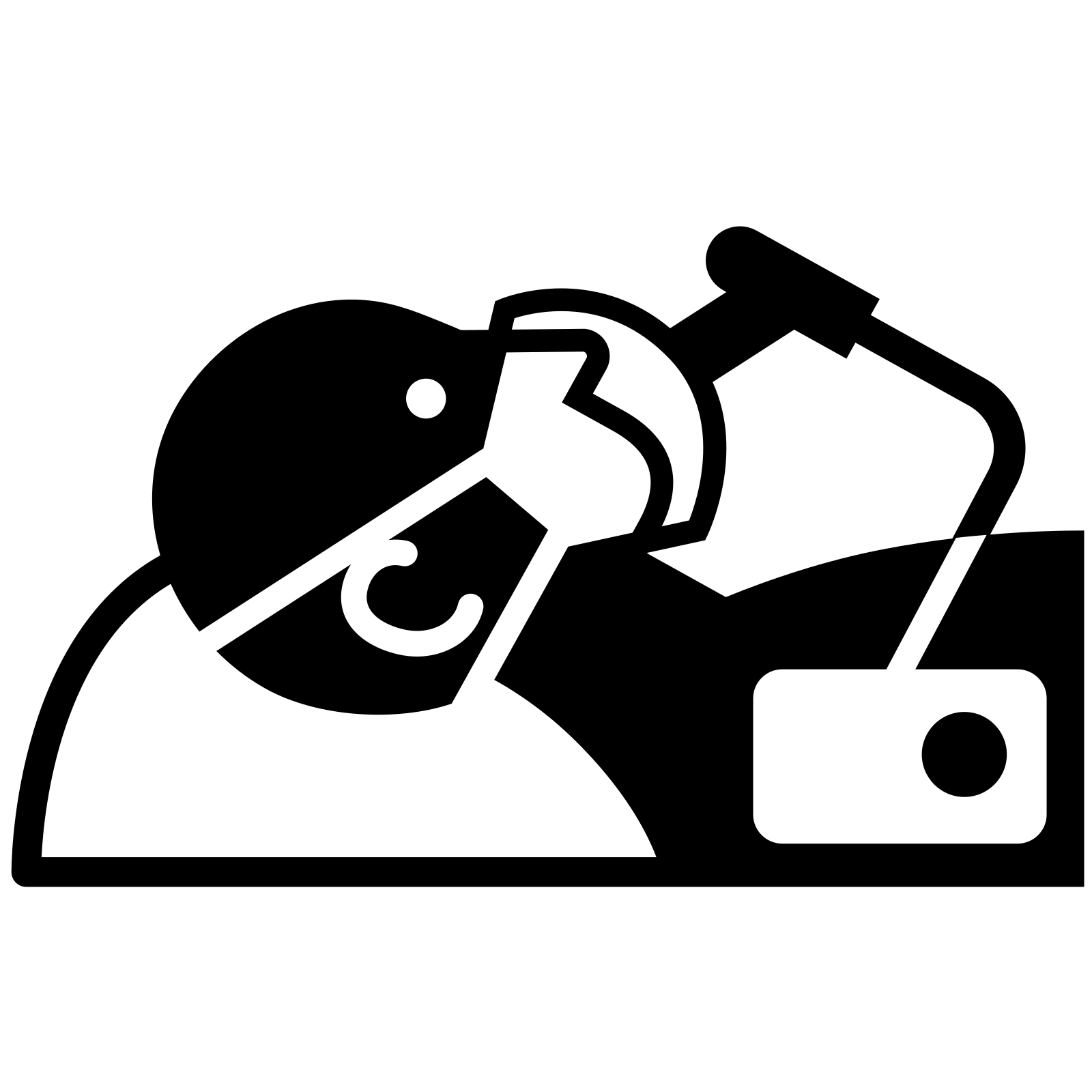
CPAP alternative
Custom oral appliances offer a quieter option for qualifying patients.
What are the warning signs you should not ignore?
Many people live with sleep apnea for years without realizing it, often because the most obvious symptoms happen while they are asleep. Pay attention to how you feel during the day, not just how you sleep at night.
- Loud, frequent snoring that disrupts a partner's sleep.
- Gasping or choking sounds during sleep.
- Persistent daytime fatigue even after a full night in bed.
- Morning headaches or a dry mouth upon waking.
- Difficulty concentrating or feeling mentally foggy throughout the day.
If daytime fatigue has become a daily struggle, it is worth asking whether your sleep quality, not just your sleep quantity, is the underlying issue.
Tired during the day? Your dentist may be able to help.
Schedule a screening with Oxnard Gentle Dentistry and find out if oral appliance therapy is right for you.
Call (805) 486-6327Frequently asked questions
Can a dentist actually diagnose sleep apnea?
A dentist cannot formally diagnose OSA, since that requires a sleep study ordered by a physician. A dentist can identify warning signs during an exam and refer you for proper testing, then provide oral appliance therapy if you are diagnosed.
Is oral appliance therapy covered by insurance?
Many medical insurance plans cover oral appliance therapy for diagnosed OSA, since it is considered a medical treatment rather than a dental one. Our team can help you understand your specific coverage.
How long does it take to get used to an oral appliance?
Most patients adjust within one to two weeks. Some mild jaw soreness or salivation in the first few nights is normal and typically resolves quickly.
Conveniently located for sleep apnea care across Ventura County
Oxnard Gentle Dentistry, located at 300 E Esplanade Dr Suite 1600 in Oxnard, is proud to serve families dealing with snoring and sleep apnea throughout the surrounding communities.